
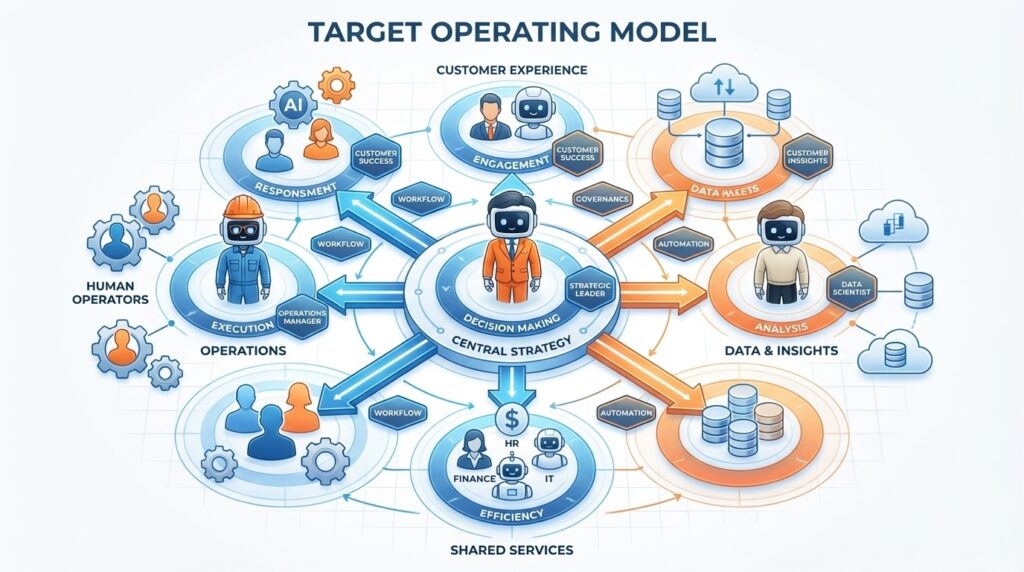
Every organization introducing a DORG must answer a fundamental question before even configuring it: how does the structure around it change? This competency provides the methodological framework for designing the hybrid organization starting from the Target Operating Model—the representation of the desired future state, where human and digital roles coexist with clear responsibilities, defined workflows, and transparent accountability chains.
The TOM is not a static endpoint: it is the reference against which the transition path is built. The competency includes methods for analyzing the current state, identifying gaps, sequencing change steps, and managing the organizational complexity of the intermediate phase—when the organization is no longer what it was but not yet what was designed.
Main contents: hybrid organization design principles, Target Operating Model construction, organizational gap analysis, transition planning, internal change management, recurring patterns and error signals.