
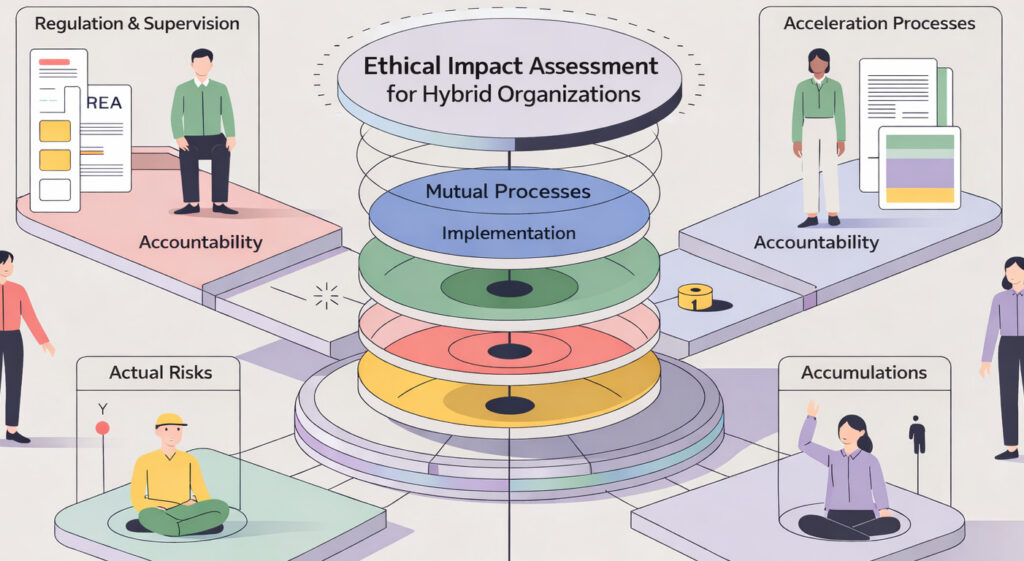
Every organization that introduces a digital employee initiates a transformation that goes beyond the technical level. It changes how people work, how decisions are made, who is responsible for what, and how the value of human contribution is redefined. DORG Society, as a Third Sector Entity with an explicit mandate for protecting workers’ rights and the sustainability of digital transformation, has developed a structured approach to assessing these impacts—before they manifest, not after.
This competency transfers the Ethical Impact Assessment method developed by the Foundation: how to analyze in advance the consequences of introducing a DORG on people’s well-being, role structures, decision-making processes, and the balance between organizational efficiency and social responsibility. It also includes the environmental dimension—the energy impact and ecological footprint of AI systems—which the Foundation’s Statute identifies as an area of explicit responsibility.
Main contents: ethical and social impact assessment framework, dimensions of analysis (work, people, decisions, accountability, environment), risk indicators and attention thresholds, internal stakeholder involvement in the assessment process, assessment documentation and use in decision-making processes, alignment with the Code of Conduct and EU AI Act requirements for high-risk systems.